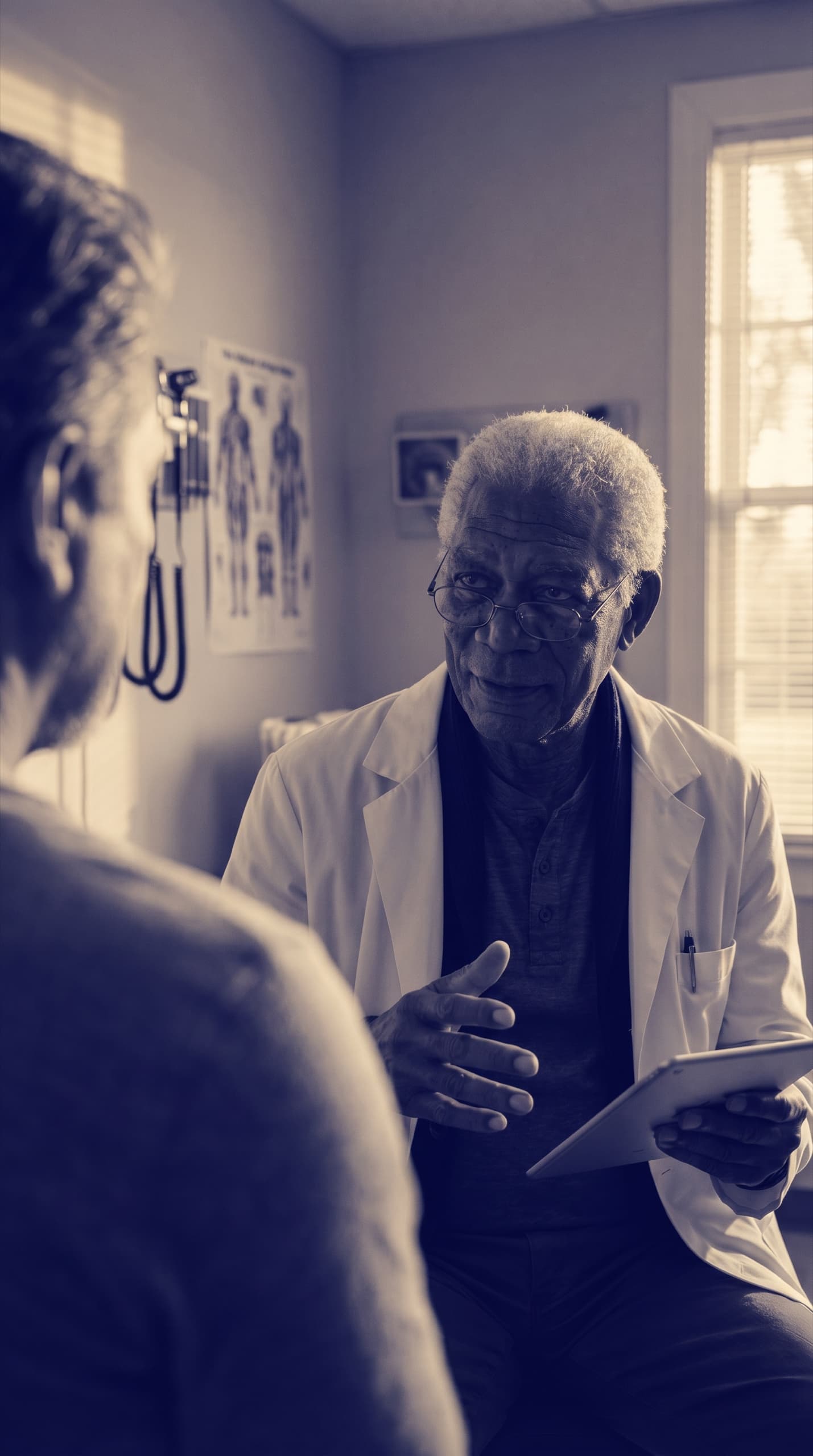
There used to be a time when providers had all the time in the world.
Providers got to know their patient, to hear their woes, heal their wounds, the mind and the body because they saw the full picture. They knew how their patients lived.
- —Demand for care far exceeds the capacity of the system to provide the needed care in a timely manner.
- —Providers lack the information they need to make the best clinical decisions.
- —Patients don't feel heard. Critical information never surfaces.
- —Clinics lose revenue on work they've already done but can't document.
- —Quality of care suffers — not from lack of skill, but lack of time and information.
AugMend started with a finding that changed how we saw the problem.
Virtual reality leads to improved patient engagement and outcomes compared to screen-based alternatives, especially for patients with mental health conditions. Patients were more willing to share, more present in the experience, and more honest about what they were going through.
At the same time, the providers treating these patients do not have enough time to see all the patients needing care and had almost no time with the patients they do see. What little time they had was consumed by administration burdens, not care. Critical information was never making it to notes. Clinics were losing revenue on work that was genuinely being done but never truly captured.
We saw these as the same problem. Sacha Moreau, Aleksy Dojnow, Alexandra Thérond, and Thomas Schneider brought product development, clinical psychology, healthcare operations, and technology together to solve it.

Four beliefs that shape every decision we make.
We believe patients hold important information for medical decision-making, and the system should not get in the way of providers' ability to collect it.
We believe psychological safety is not a luxury in clinical care. It is a prerequisite, and it can be built with technology.
We believe AI should not sit between patient and provider. It should clear the way for care that is tailored to the person receiving it.
We believe patient and provider data exchanges should be protected first, and that both should be the agents in how that data serves care quality and delivery.
Built by people who have worked inside the problem.


Work with us.
We partner with specialty care practices, health systems, and clinical researchers building toward the same vision.
Schedule a Conversation →